Automatic language translation
Our website uses an automatic service to translate our content into different languages. These translations should be used as a guide only. See our Accessibility page for further information.
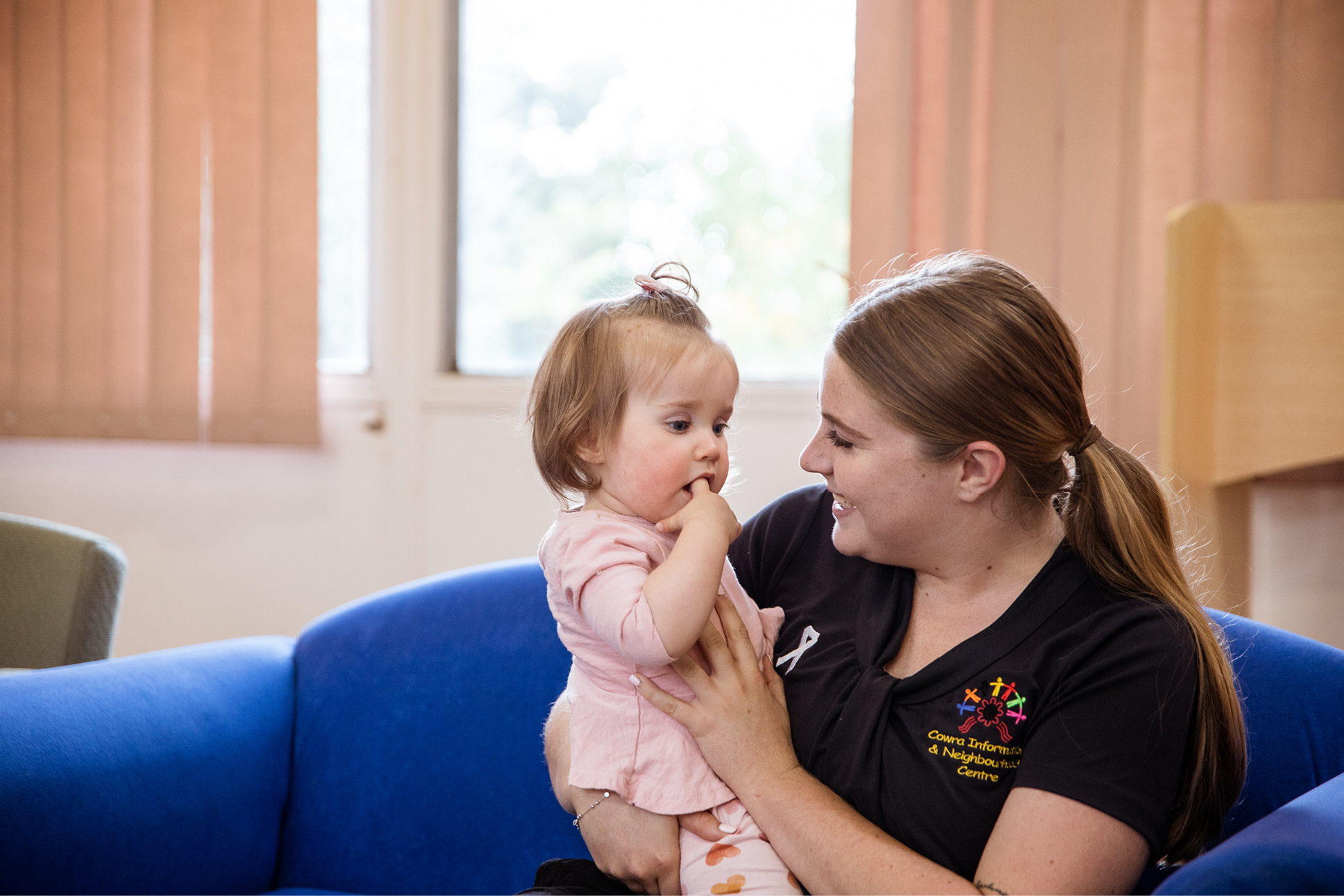
Evidence shows that children’s life chances are affected by both their families and communities, and that both can be changed for the better. Community and Family Support (CAFS) provides support for children, young people, families and communities.
Watch our animated explainer to learn more.

(Music)
Voice-over: All children deserve to grow up in a safe and happy home.
A home where young people thrive and families flourish, supported by strong, connected communities.
The NSW Government’s Community and Family Support program delivers a range of early support services for families and communities across NSW.
We support families and young people before their challenges get bigger or more complex so that they can focus on what matters – living a safe, stable, and happy life.
Community and Family Support activities can be anything from: family support; parenting courses; counselling; supported playgroups; community events; neighbourhood centres; and youth services.
Families can access as many services as they need to feel confident and secure about their family’s future.
Because when we build strong communities and support families and young people early on – we’re supporting them for a lifetime of success.
(NSW Waratah logo)
Aboriginal-led early supports play a critical role in building a child and family support system that is better equipped and more responsive to the needs of Aboriginal children, families and communities. The two case study videos below showcase the impactful work of Aboriginal Community Controlled Organisations funded through DCJ's Targeted Earlier Intervention program.
This video features staff and families from Awabakal Ltd located on Awabakal land in Newcastle, NSW. The supported playgroup Awabakal provide offers a safe and welcoming place for children and parents to connect and learn and wrap around allied health and specialist services to support children to thrive.

[Music]
Dion: Hi I'm Dion and I'm the coordinator of a Awabakal Supported playgroup.
Supported playgroups are a really special space for families to come and connect with other families. To play, have a yarn, have a cuppa, have a feed and really just get to know their children and learn in a space that is safe and secure and welcoming.
Awabakal is a is a really big part of community. It's been around for 50 years. We're still lucky enough to have some of those really powerful Elders who set up the organization are still with us and it's pretty special.
It's a special place to work and I feel really honoured to hold the position that I do.
Markeeta: My name is Markeeta Marr, nd I am the general manager of Awabakal limited. I have a little boy, his name is Case and he is almost six and he's autistic and nonverbal.
We attended the playgroup and I quickly realised that he wasn't following instructions. He wasn't saying words that other little people the same age were saying. He wasn't transitioning from activities very well. He wasn't sharing and he was becoming quite frustrated.
So probably the biggest things that I feel like I got out of the supported playgroup is, you know, that social isolation of being at home, being a single mom and going through you know grief and loss, which it would not be an unusual story for some of our families I would imagine that, um come to playgroup because unfortunately, in our community we do experience a lot of Sorry business and we do have a lot of, challenges that we have at home every day.
I think for Case, it was you know having those other service providers there like speech and OT around.
Dion: Our services were still able to wrap around and support him and it just provides so much more support to the families, and and sets our babies up for success, especially moving forward into other school settings, especially into primary school as well.
Markeeta: I think that the cultural aspect that Awabakl offers is not like anywhere else. As a mum, you want your child to be loved like you love them.
[Music]
This video showcases Gudjagang Ngara li-dhi (GNL) a provider of culturally informed early support services on Darkinyung country, on the Central Coast, NSW. GNL, offer services and support to children, young people, and families in their community fostering a sense of belonging and pride and helping them stay connected to culture and community.

[On-screen text: Connecting Through Culture]
Athol Boney: Being an Aboriginal person. It’s hard growing up. You feel sometimes almost how peoples feel segregated and left out of certain things in community.
[On-screen text: Athol Boney, Aboriginal Safe Spaces Worker Youth and Family Domestic Violence Worker (FDV)]
[On-screen text: Simone Hudson, Chief Executive Officer (CEO)]
Simone Hudson: The earlier we get in, you know, and support our families, our children and our young people, the more you see them thriving. Culture is really, really important. Culture defines who we are. We weave culture through everything we do. Culture has, you know, the ability to connect, it has you know, a sense of belonging. It’s got pride. We’re able to celebrate who we are.
Josef Graf: We have an art group, a basketball program, boys group, a didge group, and a dance group.
[On-screen text: Josef Graf, Aboriginal Cultural Therapy Worker]
And I think we use those programs to get the kids here, encouragement to keep them involved in community. It gives them that connection. If it’s not meeting other, socialising with other young people, getting them involved in community.
Alicia Bragg: And that so we have a community response, not just a service response. So, 9 to 5 we’re here, but for the rest of the time our community takes that support space.
[On-screen text: Alicia Bragg, Aboriginal Family Safety Worker Family and Domestic Violence Specialist (FDVS)]
Athol: To be able to strengthen our young people and give them confidence and to be proud of who they are and the colour of their skin, and also the blood that runs through their body.
[On-screen text: GNL receives early intervention funding from NSW Department of Communities and Justice]
[End transcript]
These stories demonstrate how our early support services are strengthening communities and improving the lives of vulnerable children, young people and families.
To find out more about how we work, visit About Community and Family Support.
For program information and resources for service providers, visit the CAFS webpages. To contact the program area, email CAFS@dcj.nsw.gov.au
Last updated: